

FREE SHIPPING
99% PURE PEPTIDES
SAME DAY SHIPPING
SECURE PAYMENTS
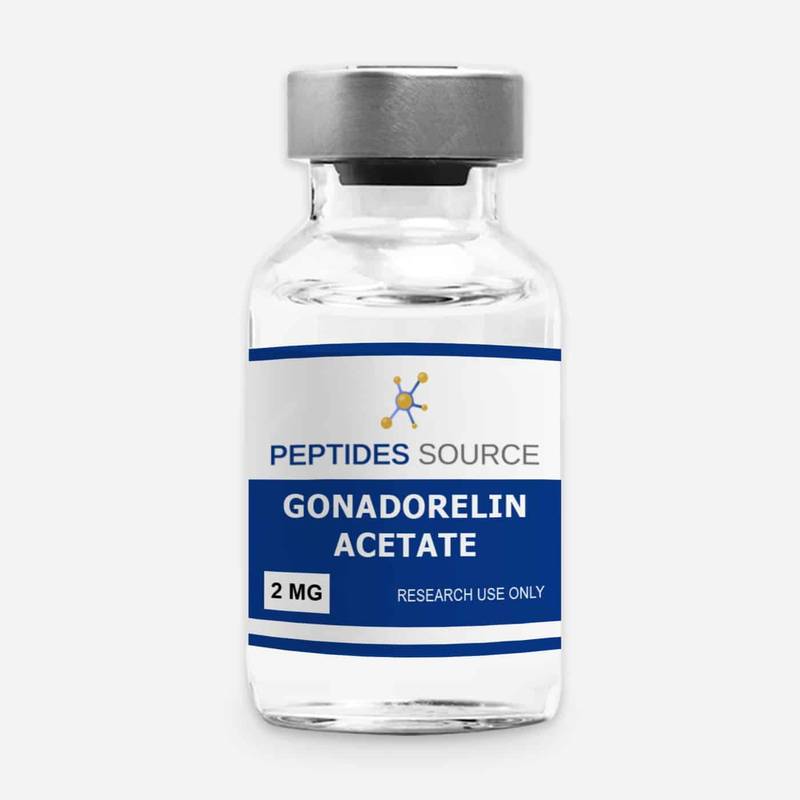
Gonadorelin Acetate 2mg
$40.00
You save
- Physical profile: Lyophilized powder
- This product is sold as a research chemical and not for human or animal consumption. For laboratory use by qualified professionals.
Availability: 31 in stock (can be backordered)
Availability: Ships today if ordered and paid by 12 PM EST. (Except Saturdays & Sundays)
Product Usage
Gonadorelin Acetate 2mg IS INTENDED AS A RESEARCH CHEMICAL ONLY. This designation allows the use of research chemicals strictly for in vitro testing and laboratory experimentation only. All product information available on this website is for educational purposes only. Bodily introduction of any kind into humans or animals is strictly forbidden by law. This product should only be handled by licensed, qualified professionals. This product is not a drug, food, or cosmetic and may not be misbranded, misused or mislabled as a drug, food or cosmetic.
Introduction
Gonadorelin Acetate has emerged as a key pharmacological agent in the study and management of reproductive endocrinology due to its central role in regulating the hypothalamic-pituitary-gonadal (HPG) axis. It is a decapeptide that mimics the action of the naturally occurring gonadotropin-releasing hormone but is produced synthetically to achieve controlled therapeutic and diagnostic applications. Because of its predictable pharmacokinetic profile and rapid clearance, gonadorelin provides researchers and clinicians with a reliable tool to assess reproductive hormone function and to manipulate fertility in both men and women. In medical practice, Gonadorelin Acetate is frequently employed in diagnostic testing, particularly when evaluating patients with suspected hypothalamic or pituitary dysfunction. Its administration helps determine whether impaired secretion of gonadotropins stems from inadequate hypothalamic stimulation or intrinsic pituitary insufficiency. This diagnostic utility makes it valuable in cases of delayed puberty, amenorrhea, and infertility of unclear origin. Beyond its role in diagnostics, gonadorelin has therapeutic applications, including controlled induction of ovulation in women with anovulatory disorders and stimulation of spermatogenesis in certain cases of male infertility. Pharmacologically, Gonadorelin Acetate is characterized by a short half-life and rapid onset of action, which allows clinicians to use it in pulse administration protocols that closely resemble natural hormone release patterns. This pulsatile mode of delivery is crucial, as continuous administration can suppress gonadotropin release, leading to downregulation of gonadal function. Therefore, the dosing regimen and mode of delivery are critical factors influencing the outcomes of gonadorelin therapy. In addition to human medicine, Gonadorelin Acetate is also used in veterinary practice, particularly in managing reproductive issues in livestock. Its ability to synchronize estrus cycles and enhance fertility has made it an important tool in animal breeding programs. Overall, Gonadorelin Acetate serves as both a research instrument and a clinical intervention, bridging the gap between endocrinological theory and practical application. By offering insight into the complex mechanisms of reproductive physiology, it continues to play a significant role in advancing the understanding and management of fertility-related conditions.Mechanism of action
Gonadorelin Acetate acts on the hypothalamic-pituitary-gonadal (HPG) axis, serving as a synthetic analog of natural gonadotropin-releasing hormone (GnRH). After administration, it binds to specific GnRH receptors located on the plasma membrane of gonadotroph cells in the anterior pituitary gland. This receptor is a G-protein-coupled receptor (GPCR), which, upon activation, stimulates the phospholipase C (PLC)–inositol triphosphate (IP₃)–diacylglycerol (DAG) pathway. Activation of this signaling cascade increases intracellular calcium levels and protein kinase C activity, ultimately triggering the synthesis and secretion of luteinizing hormone (LH) and follicle-stimulating hormone (FSH). These gonadotropins then act on the gonads: LH stimulates testosterone production in Leydig cells of the testes and promotes ovulation and corpus luteum function in the ovaries, while FSH regulates spermatogenesis in males and follicular development in females. The biological effect of gonadorelin is highly dependent on the pattern of administration:- Pulsatile administration mimics natural GnRH secretion, leading to sustained stimulation of LH and FSH release, thereby supporting normal reproductive function and fertility.
- Continuous administration, however, causes desensitization and downregulation of pituitary GnRH receptors. This results in decreased secretion of LH and FSH, ultimately reducing gonadal steroid production (estrogen and testosterone).
Structure
Sequence: Pyr-His-Trp-Ser-Tyr-Gly-Leu-Arg-Pro-Gly Molecular Formula: C55H75N17O13 Molecular Weight: 1182.311 g/mol PubChem CID: 638795 CAS Number: 9034-40-6 Synonyms: Growth Hormone Releasing Factor, Somatocrinin, SomatoliberinResearch
Role of Gonadorelin Acetate in Breast Cancer Prevention
Research into GnRH analogues has revealed multiple avenues through which suppression of gonadotropin secretion, and downstream sex steroid reduction, may contribute to breast cancer prevention. In premenopausal women, ovarian estrogen production is a major driver of hormone receptor-positive breast cancer risk. By inducing pituitary suppression (e.g. via GnRH agonists), estradiol levels fall, theoretically lowering mitogenic stimulation of breast epithelium and thus reducing risk of tumor initiation and progression in susceptible individuals. Trials have examined GnRH agonist use in early breast cancer, showing that ovarian suppression rivals surgical oophorectomy in reducing recurrence risk when used as adjuvant therapy in hormone receptor (ER)-positive cases (1). In hereditary breast cancer, particularly BRCA1 mutation carriers, one open-label clinical trial evaluated a chemopreventive regimen combining a GnRH agonist (deslorelin) with low-dose add-back estrogen and testosterone, plus intermittent progesterone, over 12 months. This resulted in a statistically significant reduction in mammographic density (median absolute decrease ~8.3%, or ~29% relative decrease), a biomarker associated with breast cancer risk, without serious adverse endometrial outcomes (2). Experimental studies have further demonstrated the direct impact of GnRH and its analogues on breast tumor biology. In vitro experiments on ER-positive breast cancer cell lines (MCF-7, T47D) showed that GnRH agonists significantly inhibited DNA synthesis and reduced mitogenic response to estradiol, indicating a cytostatic effect independent of systemic hormone suppression (3). Similarly, in triple-negative breast cancer (TNBC) models, activation of GnRH receptors (GnRHR) by agonists like leuprolide reduced metastatic behavior, promoted apoptosis, and caused cell-cycle arrest in the G0/G1 phase (4). Animal experiments have corroborated these findings, showing that GnRH analogues can slow tumor growth in xenografted mice, supporting their potential in preventive strategies (5). Moreover, molecular studies indicate that GnRH receptor activation in breast cancer cells may inhibit the MAPK/ERK signaling pathway, a key regulator of tumor proliferation and survival (6). This suggests that gonadorelin and related analogues might function through both endocrine suppression and direct anti-proliferative signaling in breast tissue. However, several caveats remain. Long-term data on breast cancer incidence (rather than surrogate markers like density or cell line outcomes) are limited. Side effects related to hypoestrogenism (bone density loss, menopausal symptoms) are of concern. Also, the optimal timing, duration, and patient selection (e.g. genetic risk, receptor status) require further elucidation.Gonadorelin Acetate Progress in Prostate Cancer
The management of prostate cancer has been profoundly influenced by therapies targeting the gonadotropin-releasing hormone (GnRH) axis. While “gonadorelin” itself (a form of GnRH) is less commonly used in long-term treatment compared to its agonists and antagonists, understanding in this area has advanced, particularly in androgen deprivation therapy (ADT), which aims to reduce testosterone that fuels prostate cancer growth. A landmark study in 1984 (Leuprolide Study Group) compared leuprolide (a GnRH agonist) with diethylstilbestrol in men with metastatic prostate cancer. It demonstrated that leuprolide provides equivalent disease control with fewer severe side effects.(7) Since then, many trials have established GnRH agonists (such as leuprolide, goserelin) as standard of care in advanced disease. For example, neoadjuvant goserelin plus radiation for men with locally advanced prostate cancer improved survival outcomes compared to radiation alone.(8) More recently, the HERO trial (2020) evaluated relugolix, an oral GnRH antagonist, showing that it achieved rapid and sustained testosterone suppression superior to that of leuprolide, with a significantly lower risk of major adverse cardiovascular events.(9) This represents a modern breakthrough: faster onset, suppression without the initial testosterone surge (flare), and better safety profiles. Also, reviews have documented that continuous suppression of LH and FSH via GnRH analogues leads to medical castration, reducing prostate cancer progression and mortality.(10) On the experimental front, preclinical studies have shown that prostate cancer cell lines exposed to GnRH analogues display reduced proliferation, increased apoptosis, and downregulated androgen receptor (AR) signaling. Animal models (xenograft mice) treated with GnRH analogues show slower tumor growth and decreased metastatic potential.(11) Molecular mechanisms explored include the induction of pro-apoptotic pathways, suppression of AR downstream genes, and modulation of growth factor signaling.(12)Gonadorelin Acetate May Reduce Dementia
There is emerging interest in the role of the gonadotropin-releasing hormone (GnRH) system (of which gonadorelin is a synthetic form) in brain aging, cognition, and dementia. Multiple lines of experimental research suggest that modulation of GnRH signaling may protect against cognitive decline and Alzheimer’s disease (AD)-like processes. In an animal model, intracerebral (hippocampal CA1) administration of GnRH in female rats injected with amyloid-β (Aβ) prevented memory deficits (in tasks of working memory and object recognition), elevated local 17β-estradiol levels in hippocampus, increased hippocampal GnRH receptor expression, and increased excitability of CA1 pyramidal neurons. Letrozole (an aromatase inhibitor) did not block many of these protective effects, indicating that some actions of GnRH are independent of estrogen synthesis.(13) This suggests that gonadorelin / GnRH may help resist Aβ-induced neurotoxicity. In transgenic mouse models of Alzheimer’s disease (e.g., tgArcSwe mice) that express mutant amyloid precursor proteins, investigations found increased mRNA levels of both Gnrh and its receptor (Gnrhr) in plaque-bearing brain tissue. Treatment of these mice with a GnRH analogue (Leuprorelin) reduced amyloid plaque deposition and modulated expression of Gnrh / Gnrhr.(14) Such experiments suggest that exogenous GnRH pathway modulation might slow some pathological hallmarks of AD. Down syndrome (DS) research also yields promising findings. Ts65Dn or similar DS mouse models demonstrate early loss of GnRH neuronal fibers and receptors in cortex/hippocampus correlated with olfactory and cognitive deficits; replacement of GnRH (via pulsatile therapy) rescued object recognition memory and olfaction in mice.(15) Small translational pilot studies in human DS participants showed improvements in executive function and trends toward enhanced episodic memory after pulsatile GnRH therapy. These effects suggest that restoring GnRH signaling can mobilize “cognitive reserve.”(15) On the clinical epidemiological side, studies of prostate cancer patients treated with androgen deprivation therapy (ADT), frequently involving GnRH agonists, raise concern rather than promise: several cohort studies find increased risk of dementia associated with GnRH agonist use, especially in unadjusted analyses.(16,17) However, many of these studies show that when adjusting for confounders (age, comorbidities) or using propensity-matching, the association weakens or disappears.(18) Some recent analyses suggest that combining GnRH agonists with androgen-targeting therapeutics (e.g., abiraterone) may mitigate risk of neurodegenerative disease.(19) Thus, it is not yet clear that GnRH modulation per se reduces dementia risk in older men under therapy; the effect may depend on timing, duration, form (agonist vs pulsatile vs antagonist), and combination with other drugs.References
- Klijn JGM, Blamey RW, Boccardo F, Tominaga T, Duchateau L, Sylvester R. The use of gonadotrophin-releasing hormone (GnRH) agonists in early and advanced breast cancer in pre- and perimenopausal women. Eur J Cancer. 2000;36 Suppl 4:S96-S101. PMID: 12706354.
- Ursin G, Pike MC, Spicer DV, Porrath SA, Reitherman RW, Lyon JL, et al. Reduced mammographic density with use of a gonadotropin-releasing hormone agonist–based chemoprevention regimen in BRCA1 carriers. Clin Cancer Res. 2007;13(2):654-662.
- Emons G, Ortmann O, Becker M, Irmer G, Springer B, Laun R, et al. High affinity binding and direct antiproliferative effects of luteinizing hormone-releasing hormone analogues in human breast cancer cell lines. Cancer Res. 1989;49(21):6187-6191. PMID: 2982100.
- Xu J, Xu J, Li Q, Guo Y, Cao L, Bai L, et al. Gonadotropin-releasing hormone receptor inhibits triple-negative breast cancer proliferation and metastasis. Front Oncol. 2022;12:825149. PMID: 35264044.
- Grundker C, Volker P, Emons G. Antiproliferative signaling of luteinizing hormone-releasing hormone in human breast cancer cells. Breast Cancer Res Treat. 2001;65(3):225-231.
- Gründker C, Günthert AR, Westphalen S, Emons G. Biology of the gonadotropin-releasing hormone system in human breast cancer. Eur J Endocrinol. 2002;146(1):1-14.
- Leuprolide Study Group. Leuprolide versus diethylstilbestrol for metastatic prostate cancer. N Engl J Med. 1984;311(20):1281-1286.
- Bolla M, van Tienhoven G, Warde P, et al. Improved survival in patients with locally advanced prostate cancer treated with radiotherapy plus goserelin. N Engl J Med. 1997;337(5):295-300.
- Shore ND, Saad F, Cookson MS, et al. Oral relugolix for androgen-deprivation therapy in advanced prostate cancer. N Engl J Med. 2020;382(23):2187-2196.
- Liu YF, Chen K, Li G, et al. Progress in Clinical Research on Gonadotropin‐Releasing Hormone Analogues in Prostate Cancer. Front Oncol. 2021;11:650-662.
- Fontana F, Sartori I, Griggi T, et al. GnRH Receptors in Prostate Cancer Cell Lines: Preclinical Models of Therapy Response. 2020;80(12):1026-1035.
- Crawford ED, Eisenberger MA, McLeod DG, et al. Hormonal Therapy in Prostate Cancer: Mechanisms of Resistance and New Targets. J Urol. 2004;172(1):S1-S9.
- “GnRH protective effects against amyloid β-induced cognitive decline: A potential role of the 17β-estradiol.” Brain Research. 2020; Naderian et al. PMID: 32805333.
- Elevated mRNA levels of gonadotropin-releasing hormone and its receptor in plaque-bearing Alzheimer’s disease transgenic mice; treatment effects with leuprorelin acetate. Journal of Alzheimer’s Disease. 2015; GNRH/A-model study. PMID: 25089901.
- Manfredi-Lozano M, Prevot V, Hamm K, et al. GnRH therapy in Down syndrome and mouse AD models improves cognition and olfaction. Neurobiology of Aging. 2022; Ts65Dn/THY::TAU22 & human pilot data.
- Risk of dementia in patients treated with GnRH agonists for prostate cancer: a nationwide cohort. Scientific Reports or equivalent 2021; (HR ~1.4-1.7 in unadjusted models). PMID: 33378392.
- Androgen-deprivation therapy increases the risk of depression, dementia, Alzheimer’s disease, and Parkinson’s disease. News-Medical summary of cohort data. 2023.
- “No increased risk of dementia in patients receiving ADT for prostate cancer: a 5-year follow-up.” Taiwan Longitudinal Health Insurance Database. 2017. PMID: 28792578.
- Branigan D, et al. Androgen-targeting therapeutics mitigate adverse effects of GnRH agonists on neurodegenerative disease risk among prostate cancer patients. Cancer Medicine. 2022; DOI: 10.1002/cam4.4650.


