

Buying research peptides one vial at a time is fine for a pilot study. It stops being fine the moment a protocol scales, a study runs for months, or several benches draw from the same supply. At volume, the question shifts from “is this vial good?” to “will vial number two hundred behave exactly like vial number one?” That is the real problem wholesale ordering has to solve, and it is a different problem from retail sourcing.
This guide covers how bulk research-peptide supply works for laboratories, universities, and research programs: who orders at volume and why, what actually matters in a wholesale supply relationship, how institutional ordering is handled, and the quality and storage considerations that only show up at scale. Everything here is written for laboratory and research use only.
Who orders research peptides at volume
Bulk ordering is driven by a few predictable situations. A laboratory running a multi-arm study needs the same compound, from the same source, across every arm. A university group supporting several investigators wants one procurement relationship rather than a dozen. A research program planning a year of work would rather secure consistent supply up front than re-source mid-project and introduce a new variable. In each case the buyer is not chasing a single product. They are buying a supply relationship they can plan around.
That framing matters because it changes what “a good deal” means. At volume, predictability and consistency outrank a marginal per-unit saving. A cheaper lot that behaves differently from the last one is not a saving, it is a confound.
What actually matters in a wholesale supply relationship
Four things separate a wholesale source worth standing up an account with from one worth avoiding.
Lot-to-lot consistency. This is the single most important property of a bulk supply. Reference standards and consistent characterization exist precisely because keeping quality stable across batches is what reproducible work depends on [2]. A wholesale partner should be able to speak to how they hold consistency across production runs, not just vouch for a single batch.
A certificate of analysis for every lot. Purity confirmed by high-performance liquid chromatography, and identity confirmed by mass spectrometry, are the standard checks [1]. In a wholesale relationship the important detail is that the COA is lot-specific and travels with each shipment, so a large order can be tied back to the exact production run it came from rather than a single representative document.
Traceability at scale. When you are ordering repeatedly, you need to be able to trace any given shipment back through the chain: which lot, when it was produced, when it was tested. That chain of custody is what lets you isolate a problem to a batch instead of second-guessing an entire body of work. We go deeper on how labs vet a source for exactly this in Beyond COAs: How Labs Vet Peptide Suppliers for Consistency and Traceability.
Stable, domestic supply. For ongoing work, a US-based supply chain means shorter transit, easier traceability, and fewer surprises on reorder. A wholesale partner that can hold stock and turn around repeat orders predictably is worth more than one that is cheaper but intermittent.
How institutional and bulk ordering works
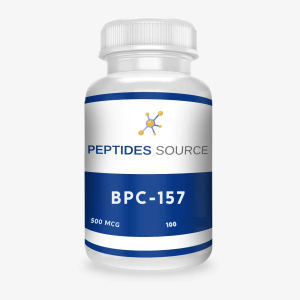
Wholesale ordering is a relationship, not a checkout. In practice it runs on a quote-and-account basis rather than a retail cart: you tell the supplier the compounds and quantities you expect to need, and they come back with bulk pricing and lead times. Institutional buyers often need to work through purchase orders and formal procurement, so the supplier should be able to accommodate that rather than only accepting card-at-checkout retail orders.
For research groups, the practical move is to consolidate. Rather than each investigator ordering separately, a single account with agreed bulk terms simplifies procurement, keeps documentation in one place, and makes lot tracking far easier. If you are evaluating a source before committing to volume, the criteria that matter are laid out in Selecting Lab Peptides Supplier Criteria for Reproducible Data.
Quality control at scale
At volume, quality control is less about any single vial and more about the system that keeps every vial equivalent. The controls that matter:
- Lot-specific COAs, so every shipment carries its own purity and identity data rather than inheriting a generic certificate. How to read one is covered in COA and Testing Explained: A Comprehensive Guide.
- Consistent analytical method, so purity figures are comparable lot to lot rather than measured different ways. Why that consistency underpins reliable results is covered in Why Peptide Purity Standards Define Reliable Lab Results.
- Reference-standard-backed characterization, the practice that keeps quality stable across production and is the backbone of consistent peptide supply [2].
The point of all of this is boring on purpose: at scale, you want the compound to be uninteresting. No batch-to-batch drama, no surprises, just the same input every time.
Storage and stability for larger inventories
Buying in bulk means holding inventory, and inventory has to be stored correctly or the advantage of buying ahead evaporates. Stability guidance for peptides is consistent: keep them lyophilized, cold, and away from light, and they hold far better than material left in suboptimal conditions [3]. For a wholesale buyer that means planning cold storage capacity before the order lands, and rotating stock sensibly so older lots are used first. What laboratories tend to overlook about holding vials at scale is covered in What Laboratories Overlook About Research Peptide Vials.
Ordering wholesale from Peptides Source
Our catalog is produced and tested in the USA, purity is verified by HPLC and mass spectrometry, and documentation is available per lot so a large order can be traced and verified rather than taken on trust. For bulk and institutional needs, the practical starting point is to browse the wholesale research peptides category and the full research peptide vials range, then reach out with the compounds and quantities you expect to need so we can put together bulk terms. High-volume research staples like BPC-157 20mg are already set up for larger orders.
If you are standing up a supply relationship for a lab or program, start with the documentation and the consistency story: ask how lot-to-lot consistency is held, confirm that COAs are lot-specific, and plan your storage before the first bulk shipment. A source that answers those cleanly is one you can build a year of work on. You can browse the full catalog through the shop.
Why wholesale research peptides orders still need lot files
Labs order this analog as a named reagent. Then they must prove what arrived. In fact, the incoming label is only the start of the trail. A lot certificate is that proof. The file should match the label lot. It should also match the stated form and mass. If those lines disagree, the lot is not ready for a careful assay.
Peptides Source publishes lot files in the certificate library. Therefore a buyer can read a file for this analog before placing an order. In addition, the same library lists other lots from the same shop. Wholesale research peptides orders still need a lot-matched file for each lot, not one generic sheet.
What a lot certificate should show
Confirm these lines on every lot certificate for this analog:
- A lot number that matches the label.
- Identity by mass spectrometry, with an observed mass that fits the stated form.
- Purity by reversed-phase HPLC, with a chromatogram and a main-peak value.
- Net peptide content, when the lab reports it.
- An endotoxin result, when the lab reports it.
- The name of the testing lab, so you can verify the file.
Still, the lot value on the certificate is the value that counts. For example, two lots can both meet the listing and still differ by a small amount. Related impurity classes are reviewed by D’Hondt et al., 2014. That paper is a methods review. It does not describe use in a person. After that review, wholesale research peptides orders should still be checked lot by lot.
Frequently asked questions
What counts as a wholesale research peptide order?
Wholesale generally means ordering at a volume beyond individual retail quantities, typically for a laboratory, university, or research program supplying multiple studies or investigators. Pricing and terms are arranged per order rather than at a fixed retail price.
Why does lot-to-lot consistency matter more than price at volume?
Because a cheaper lot that behaves differently from the previous one introduces a variable into your work. At scale, a consistent, traceable supply is worth more than a marginal per-unit saving, since reproducibility depends on the input staying the same.
Should every bulk shipment come with its own certificate of analysis?
Yes. A lot-specific COA, confirming purity by HPLC and identity by mass spectrometry, should travel with each production run so a large order can be traced back to the exact lot rather than a single generic document.
Can institutions order via purchase order?
Reputable wholesale suppliers accommodate institutional procurement, including purchase orders, rather than requiring retail card checkout. Consolidating a group’s ordering into one account also simplifies documentation and lot tracking.
How should bulk peptide inventory be stored?
Keep peptides lyophilized, cold, and out of direct light, and plan storage capacity before a bulk order arrives. Rotate stock so older lots are used first, and store away from heat to preserve stability across the inventory.
All products are sold strictly for laboratory and research use only. Not for human consumption. This content is informational and describes sourcing, procurement, and quality-assurance considerations for research buyers; it is not guidance on use.
References
- Mant, C. T., Chen, Y., Yan, Z., Popa, T. V., Kovacs, J. M., Mills, J. B., Tripet, B. P., & Hodges, R. S. (2007). HPLC analysis and purification of peptides. Methods in Molecular Biology, 386, 3–55. https://pubmed.ncbi.nlm.nih.gov/18604941/
- McCarthy, D., Han, Y., Carrick, K., Schmidt, D., Workman, W., Matejtschuk, P., Duru, C., & Atouf, F. (2023). Reference Standards to Support Quality of Synthetic Peptide Therapeutics. Pharmaceutical Research, 40. https://link.springer.com/article/10.1007/s11095-023-03493-1
- Merck / Sigma-Aldrich. Handling and Storage Guidelines for Peptides and Proteins (Technical Article). Merck / Sigma-Aldrich handling & storage guidelines