
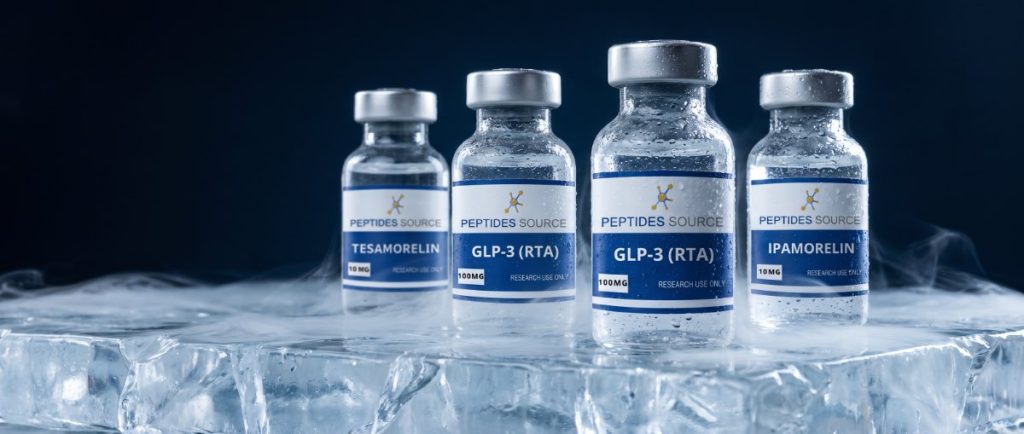
Lab tested peptides USA is a search that returns a thousand listings carrying the same two words, and “lab tested” is the least standardized phrase on any of them. It is not a regulated term. It carries no required method, no required laboratory, and no required threshold. In practice it means one thing: somebody ran an analytical test on some material at some point. Every vial in our range of lab tested peptides supplied from the USA is sold on the back of that claim, which is exactly why a researcher should know how to take the claim apart.
All material discussed on this page is supplied for laboratory research use only. It is not for human or animal consumption, and nothing here describes use in a person.
This page is the framing layer. It answers what the phrase means and what it cannot mean. Where a sub-question has a real technical answer, it is handed off to the page that already covers it rather than half-answered here.
The short version
- “Lab tested” is marketing language, not a standard. No US rule defines it for research chemicals.
- The only question that decides its value is who ran the test. In-house and independent are not the same claim.
- A test result is attached to a single lot, not to a product, a brand or a website.
- A certificate of analysis is only evidence if the lot number on it matches the lot number on your vial. That one check does most of the work.
- Five things “lab tested” never establishes: sterility, condition on arrival, the competence of the testing laboratory, anything at all outside a laboratory, and whether the next lot will match.
Who ran the test is the whole question
Strip the phrase back and there are only two cases.
In-house testing means the party selling the material also generated the result. The method can be perfectly sound. The problem is structural, not technical: the organization with a commercial interest in a passing result is the organization producing the result, and nothing in the document lets an outside reader separate the two.
Independent, or third party, testing means an unrelated laboratory received a sample and reported on it. The commercial interest and the measurement sit in different organizations. That is the entire difference, and it is why the distinction is worth more than any purity figure printed next to it.
| In-house testing | Independent third party testing | |
|---|---|---|
| Who generated the result | The seller | An unrelated laboratory |
| Commercial interest in the outcome | Held by the party measuring | Separated from the party measuring |
| What the certificate header shows | The seller’s own name, or no laboratory named at all | A named laboratory that is not the seller |
| How a researcher can check it | Largely cannot | Contact the named laboratory, or check its accreditation status |
| What it is reasonable to conclude | A measurement was taken | A measurement was taken by a party with nothing to gain |
A third case appears in real listings: no laboratory named anywhere. A certificate with no issuing laboratory on it is not a third party document, whatever the product page says. Treat an unnamed issuer as in-house until the name is produced.
Accreditation is a separate layer again. A laboratory can be independent and still unaccredited. The international standard for testing laboratory competence is ISO/IEC 17025:2017, general requirements for the competence of testing and calibration laboratories, and an accredited laboratory has been assessed against it by an accreditation body. “Third party” tells you who ran the test. Accreditation tells you whether they were any good at it.
How labs work through supplier claims past the paperwork itself, including batch to batch consistency and chain of custody, is covered in our walkthrough on how labs vet peptide suppliers beyond the certificate.
What a test measures, at a framing level
There are two separate questions in any peptide analysis and they need different instruments. Confusing them is the most common misreading of a certificate.
| The question | What it is asking | Which instrument answers it |
|---|---|---|
| Identity | Is this the molecule the label names, or a different one? | Mass spectrometry, by measuring molecular mass |
| Purity | What proportion of the material is the named molecule rather than something else? | High performance liquid chromatography, by separating components and measuring the main peak |
That is the whole framing, and it is enough to read a certificate critically. A purity number on its own is not an identity. A sample can be 99 percent pure and be 99 percent of the wrong compound, because a purity method measures how much of a sample is one dominant component, not which component that is. The two results belong together.
The methods themselves, how each one produces its number, what a chromatogram looks like and where each method falls down, are covered in full in our comparison of HPLC versus mass spectrometry for peptide purity. The reasoning behind the thresholds, and what a stated purity percentage does and does not commit a supplier to, is in our explanation of why purity standards define reliable lab results.
A certificate of analysis is tied to a lot, not to a product
This is the point that collapses most “lab tested” claims, and it is simple.
A certificate of analysis records the results of tests performed on a defined quantity of material produced in one run. That quantity is the lot, sometimes called the batch. The certificate is a statement about that lot and nothing else. It does not describe the product as a category, the supplier’s other compounds, the same compound from an earlier or later run, or the vial in your hand unless the lot numbers match.
Two vials of the same compound from the same supplier can come from different lots with different certificates and different results. That is normal manufacturing. It is also why a single certificate displayed permanently on a product page, with no lot number on it, is a brochure rather than evidence. A current certificate should change when the lot changes.
What each line on the document is for, how one is produced, and what the sections mean in order, are set out in our guide to certificates of analysis and peptide testing.
How to check a certificate belongs to the vial in front of you
Five checks, in order. The first two do most of the work and take under a minute.
- Read the lot number off the vial label, then find the same number on the certificate. Not a similar number. The same one. If the certificate carries no lot number, ask for one that does.
- Check the compound name and stated quantity match the label. A certificate for a different presentation of the same compound is a different lot.
- Find the issuing laboratory’s name in the header. No name means not independent. A name means checkable.
- Check the test date sits before the vial was filled or shipped, and note how far before.
- Confirm both questions were answered. An identity result and a purity result. One without the other is half a certificate.
A certificate you were sent on request is worth more than one displayed on a page, because a supplier who can produce the document for your specific lot is demonstrating that lot level records exist. A supplier who cannot is demonstrating the opposite, whatever the page says.
What “lab tested” does not establish
This section matters more than any of the above. A clean certificate is real evidence of exactly one thing: the composition of a sample of one lot on one date. It is silent on everything else.
| What it does not establish | Why not | What would address it |
|---|---|---|
| Sterility or endotoxin status | Identity and purity methods measure composition. Neither looks for microbial contamination or bacterial endotoxin. These are separate tests with separate reports. | A sterility result and an endotoxin result, reported separately and tied to the same lot |
| Condition on arrival | The test was performed on a sample at the laboratory. It says nothing about what happened to your vial in a warehouse or in transit, including temperature excursions. | Storage and shipping conditions on record, and the handling guidance printed on the label |
| The testing laboratory’s competence | Being independent is not being accredited. An unaccredited third party is still a third party. | The laboratory’s accreditation status and scope, checked with its accreditation body |
| Anything outside a laboratory | Research use only material is not evaluated for, or supplied for, any use in a person or an animal. A purity figure is not a safety finding of any kind. | Nothing. This is a boundary, not a gap to be filled |
| That the next lot will match | The certificate covers one run. Consistency across runs is a different property and needs more than one certificate to demonstrate. | Certificates across several lots, compared |
The research consequences of the first and last rows, what unmeasured impurities and lot to lot drift do to a dataset, are set out in our piece on the research risks when peptide purity drops.
Where “research use only” comes from in US labeling
The phrase is not invented marketing. It has a defined meaning in US labeling rules, and knowing where it comes from makes the limit above easier to hold.
In the United States, the labeling requirements for in vitro diagnostic products at 21 CFR 809.10 provide that a product in the laboratory research phase of development, and not represented as an effective in vitro diagnostic product, must bear the statement, prominently placed: “For Research Use Only. Not for use in diagnostic procedures.” The FDA has also published guidance on the distribution of such products, Distribution of In Vitro Diagnostic Products Labeled for Research Use Only or Investigational Use Only, issued in November 2013.
One precision point. That regulation governs in vitro diagnostic products, and a research peptide is not one, so the citation is the origin of the phrase rather than the rule governing a peptide vial. What it establishes is the plain meaning the phrase carries in US labeling language: laboratory research phase, not represented as effective for anything. Material supplied on that basis carries no FDA evaluation behind it, and no certificate changes that.
What to ask a US supplier before you order
Six questions. Each has a short factual answer, and a supplier either has it or does not.
- Who performed the testing, by name? A laboratory name, not “an independent lab”.
- Is that laboratory accredited, and to what? The standard and the accreditation body.
- Can you send the certificate for the lot I will actually receive? Before the order is placed, not after.
- Does the certificate cover identity as well as purity? Both questions, both methods.
- Are sterility and endotoxin reported, and separately? If the answer is that purity covers it, the answer is no.
- Can I see certificates for two different lots of the same compound? This is the simplest test of consistency there is.
A supplier who answers all six is not necessarily better than one who answers five. But a supplier who cannot name the laboratory has not, in any useful sense, told you the material was lab tested.
What this page does not cover
A great deal of writing about research peptides sits outside a laboratory context entirely, and none of it is reproduced here. The subject of this page is narrower: what an analytical claim means, what a certificate is attached to, and what neither one establishes.
Research material
lab tested peptides supplied from the USA. Supplied for laboratory research use only, with a lot-matched certificate of analysis.
References
- International Organization for Standardization. ISO/IEC 17025:2017, General requirements for the competence of testing and calibration laboratories. Edition 3, 2017, corrected version 2018, reviewed and confirmed 2023. https://www.iso.org/standard/66912.html Cited for the existence and title of the international standard against which testing and calibration laboratory competence is assessed.
- US Electronic Code of Federal Regulations. 21 CFR 809.10, Labeling for in vitro diagnostic products. https://www.ecfr.gov/current/title-21/chapter-I/subchapter-H/part-809/subpart-B/section-809.10 Cited for the required labeling statement “For Research Use Only. Not for use in diagnostic procedures.” applying to a product in the laboratory research phase of development and not represented as an effective in vitro diagnostic product.
- US Food and Drug Administration. Distribution of In Vitro Diagnostic Products Labeled for Research Use Only or Investigational Use Only. Guidance for Industry and FDA Staff. November 2013. https://www.fda.gov/regulatory-information/search-fda-guidance-documents/distribution-in-vitro-diagnostic-products-labeled-research-use-only-or-investigational-use-only Cited for the existence, title and date of the FDA guidance on distribution of products carrying research use only labeling.
Frequently asked questions
Can I ask for the raw chromatogram rather than the summary figure?
Yes, and the answer you get is informative in itself. A summary figure is a number somebody typed; a chromatogram is the measurement it came from, and it shows the shape of what else was in the sample. A supplier that holds the underlying data can usually produce it. One that cannot is telling you something about how close it sits to the measurement.
What does an accreditation actually cover?
A defined scope, not the laboratory as a whole. Accreditation is granted for named methods on named matrices, so a laboratory can be accredited and still have run your test outside the scope it was assessed for. The scope document is public and worth reading against the method named on the certificate, rather than reading the accreditation logo as a blanket assurance.
Two lots of the same product have different certificates. Is that a problem?
Not by itself; it is what lot-specific testing looks like. Values move between runs and a certificate that never varies is more suspicious than one that does. What matters is whether both sit inside the stated specification and whether the method was the same. A difference in method between two certificates for the same product is the finding worth chasing.
What if a certificate turns out not to match the material?
Raise it with the supplier against the specific lot number, in writing, and ask for the testing laboratory’s report rather than a reissued summary. Keep the vial and its packaging. A supplier that reissues a certificate without explaining the discrepancy has resolved a document problem rather than a material one, and those are different things.
Related reading: Peptide Supplier Checklist; What Is PEG MGF? The Pegylated IGF-1 E Peptide, Explained for Researchers