
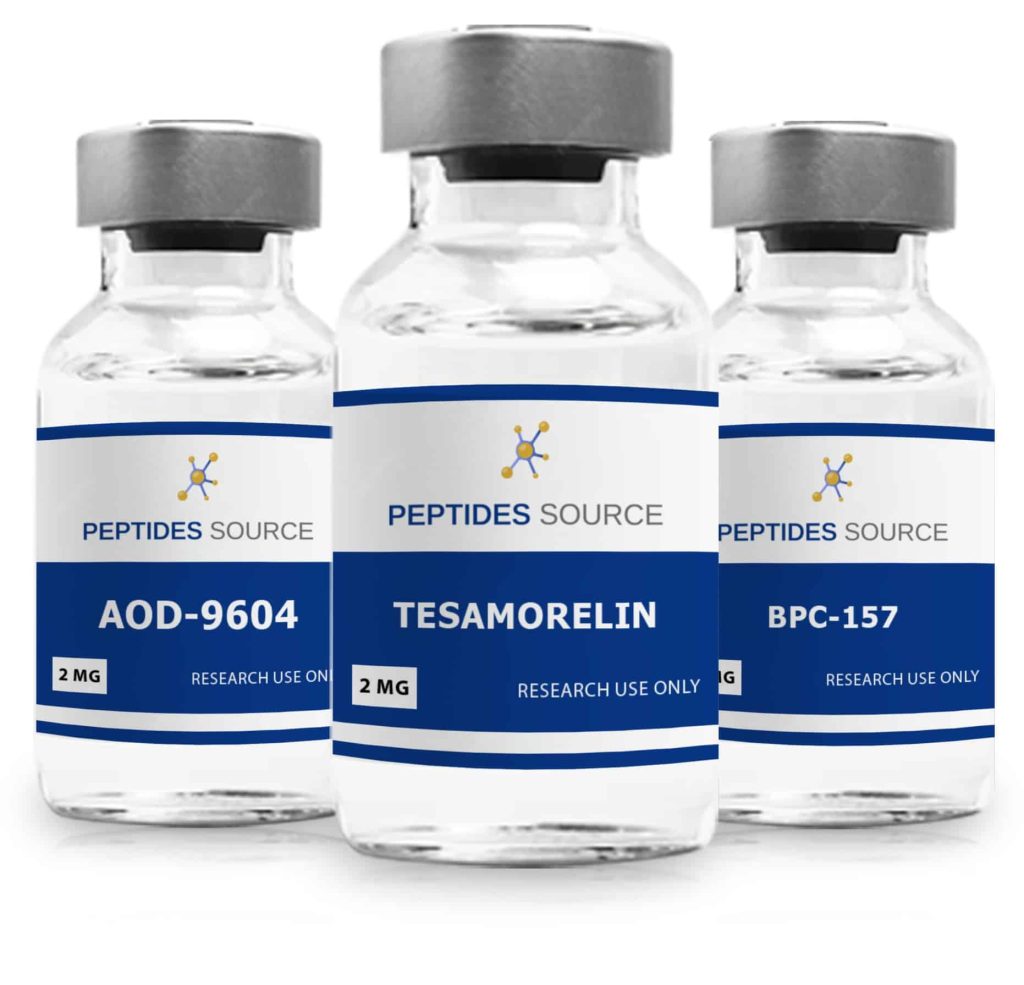
USA made peptides is a phrase that can describe three completely different supply chains, and nothing on a website tells you which one you are looking at. A peptide can be synthesized in a domestic facility. It can be synthesized abroad and filled into vials domestically. Or it can be made and filled abroad and simply warehoused and shipped from a domestic address. All three get written the same way on a product page, which is why the phrase alone settles nothing. Our own catalog of USA made research peptides is subject to the same test as any other. This page is about the second question, the one that actually matters: what documentation turns that claim into something you can check.
All material discussed on this page is supplied for laboratory research use only. It is not for human or animal consumption, and nothing here describes use in a person.
The claim, in four lines
- “Made in the United States” has a legal definition for product labeling, and it is stricter than it first appears.
- Three different supply chains get described with the same words: domestic synthesis, domestic fill and finish, and domestic shipping only.
- A certificate of analysis evidences identity and purity. It does not evidence origin unless the document itself names the manufacturing site.
- Lot and batch traceability is the test that works. A flag on a homepage is a claim. A lot number that resolves to a dated document is evidence.
- “USP” on a label is a claim about identity against a monograph, not a claim about geography.
- You can test any supplier’s claim with four questions. They are at the bottom of this page, and they apply to us as well.
What USA made peptides means in law
The Federal Trade Commission has a labeling rule for this exact claim. Under the Made in USA Labeling Rule, it is an unfair or deceptive practice to label a product as made in the United States unless three things are all true: final assembly or processing occurs in the United States, all significant processing that goes into the product occurs in the United States, and all or virtually all ingredients or components are made and sourced in the United States (16 CFR Part 323).
Read that again with a peptide vial in mind. For a lyophilized research peptide, the significant processing is the synthesis, the cleavage and the purification. The ingredients and components are the protected amino acid building blocks, the resin, the solvents, the vial, the stopper and the seal. The rule is not satisfied by a domestic address on the packing slip.
A second body of law runs alongside it. Customs marking rules define country of origin as the country of manufacture, production or growth, and they add that further work done in another country must effect a substantial transformation before that other country becomes the origin (19 CFR Part 134). Repackaging bulk powder into vials is the case to watch. Whether vialling a finished peptide is a substantial transformation is a technical determination, not something a supplier gets to decide in marketing copy.
The three supply chains that share one phrase
The distinction is rarely spelled out on a product page, so it is worth being blunt about it.
| What happened | Where the peptide was built | Where it was put in the vial | What a domestic claim is worth |
|---|---|---|---|
| Domestic synthesis and fill | A facility in the United States | A facility in the United States | Strongest. Both significant steps are domestic |
| Imported bulk, domestic fill and finish | Overseas, usually in bulk kilogram lots | A facility in the United States | Partial. The chemistry happened elsewhere |
| Imported finished vials, domestic warehousing | Overseas | Overseas | Weakest. Only the shipping label is domestic |
None of these is inherently a problem for laboratory work. Plenty of excellent material is synthesized overseas by contract manufacturers with strong analytical programs. The problem is the mismatch: a laboratory that believes it sourced domestic synthesis and in fact sourced domestic warehousing has no idea which facility made its material, and therefore no way to investigate a result that looks wrong.
What domestic synthesis and fill actually involve
Solid phase peptide synthesis builds a chain one residue at a time on a resin support, then cleaves the finished chain off, then purifies it, usually by preparative high performance liquid chromatography. The output is a bulk powder with a measured purity and an identity confirmed by mass spectrometry.
Fill and finish is a separate operation and often a separate site. Bulk powder is weighed into vials, lyophilized if it is not already, stoppered, sealed and labeled. Each fill run becomes a lot. This is the step where a lot number is created, and it is the step most often mistaken for manufacturing.
The practical consequence: synthesis and fill can produce two different lot numbers at two different addresses. A supplier who holds both records can tell you where a given vial’s chemistry was done. A supplier who only holds the fill record cannot, however sincerely they believe the material is domestic.
What documentation actually evidences origin
Origin is a paperwork question. These are the documents that answer it, in rough order of how hard they are to fake.
| Document | What it evidences | What it does not evidence |
|---|---|---|
| Manufacturer’s batch record | Which facility ran the synthesis, when, and to what process | Nothing about purity unless the analysis is attached |
| Certificate of analysis naming the manufacturing site | Identity and purity, plus origin if the site is printed on it | Origin, if the site line is blank or says only the brand name |
| Certificate of origin or customs entry record | Declared country of origin for an imported shipment | Analytical quality of any kind |
| Fill and finish record | Where and when the vials were filled and sealed | Where the peptide itself was synthesized |
| Third-party test report | Identity and purity as measured by an independent laboratory | Origin, almost always |
| A flag graphic on a website | Nothing | Anything |
What a certificate of analysis does and does not tell you
A certificate of analysis is the most important document a research laboratory receives, and it is routinely asked to do a job it cannot do.
What it tells you. For a given lot, it reports the tests that were run and their results. For a research peptide that normally means identity by mass spectrometry, purity by high performance liquid chromatography with a stated percentage and method, appearance, and sometimes water content, peptide content and endotoxin screening. It carries a lot number, a test date and the name of the laboratory that ran the tests. Our walkthrough on reading lab testing and certificates of analysis goes through each line.
What it does not tell you. Unless the document explicitly names the manufacturing facility, it is silent on origin. A certificate of analysis for a peptide synthesized in one country and tested in another will carry the testing laboratory’s name and address, not the synthesis site’s. The laboratory address gets read as the manufacturing address constantly, and it is a different fact.
Two further limits. A certificate describes one lot, so a certificate dated eighteen months ago says nothing about the vial that arrived this week. And a supplier-generated certificate is a self-assessment. An independent one carries weight only if the laboratory is itself competent to the work, which is what accreditation to ISO/IEC 17025, the international standard for the competence of testing and calibration laboratories, is meant to establish.
Why lot and batch traceability beats any origin claim
Here is the test that separates a real documentation program from a marketing one.
Take the lot number printed on the vial in front of you. Ask the supplier for the document set for that specific lot. A supplier with working traceability returns, within a day or two, a certificate of analysis whose lot number matches the vial, dated at or near the fill, naming the tests and the laboratory.
A supplier without working traceability does one of four things. They send a certificate for a different lot. They send an undated document. They send a document with the lot field blank. Or they explain why the request is unusual.
That exchange tells you more than every origin claim on the website combined, because it is the same mechanism you will rely on if an assay goes sideways and you need to know whether the material or the method was at fault. For a compound where several suppliers sell the same sequence, say BPC-157 or ipamorelin, lot level documentation is the only thing distinguishing one vial from another. Common sourcing and documentation questions are covered in our research peptide FAQs.
What USP and compendial references mean in this context
“USP grade” and “compendial” appear on peptide listings and are frequently misread as quality or origin badges. They are neither.
Federal regulation defines a compendial name narrowly: a material defined in an official compendium is one having the identity set out in that compendium, and anything that differs in strength, quality or purity from the compendial standard must state all the respects in which it differs and the extent of each difference (21 CFR 299.5).
Three things follow for a research laboratory:
- A compendial claim is a claim about identity against a published monograph. It says the material matches a defined specification. It says nothing about where the material was made.
- The monograph has to exist. A compendium covers the substances it has published a monograph for, and many research compounds are not among them. Where no monograph exists, a “USP grade” claim has nothing to be graded against, so ask which monograph is being referenced.
- Deviations must be stated. A supplier invoking a compendium while declining to list differences from it has not met the standard they are citing.
The United States Pharmacopeia also publishes analytical reference standards and general chapters. Those are legitimate and useful references for a method. Referencing a method is a different act from certifying a product.
What research use only means on the label
Research use only is a regulatory designation, not a disclaimer a supplier writes for comfort. The clearest written federal description of it sits in the Food and Drug Administration’s guidance on research use only labeling. That guidance addresses in vitro diagnostic products specifically, and research peptides are not diagnostics, so it is not directly binding here. It is still the clearest statement of what the designation is for: material in the laboratory research phase of development, not represented as effective for any other purpose.
The practical reading for a laboratory. A research use only designation is a scope limit on the material, and it means certain documents will not exist. Documents belonging to other regulatory categories will not exist for it, and a supplier offering them is describing something other than research supply.
The four questions that test any supplier
These work on any catalog, including ours. None of them requires technical expertise and all four can be asked by email.
- “Where was this lot synthesized, and where was it filled?” Two addresses, or one address with both steps named. A single vague answer means the distinction has not been tracked.
- “Send me the certificate of analysis for the lot number printed on my vial.” Check the lot number matches, check the date is near the fill, check the method is named, check the laboratory is named.
- “Is the testing laboratory independent of the manufacturer, and is it accredited?” Independent and accredited are two separate claims, and both are checkable against the accrediting body’s register.
- “Which of these documents can you not provide, and why?” The most informative question on the list. A straight answer about a gap is worth more than a complete set of assurances.
These four questions are the ones we expect to be asked, and our own production and testing arrangements are set out on our about page. A supplier who objects to answering them has told you something.
What this page does not cover
This page is limited to supply chain, documentation and labeling. Subjects outside that scope belong to a different kind of page and none of that material is reproduced or summarized here.
Research material
catalog of USA made research peptides. Supplied for laboratory research use only, with a lot-matched certificate of analysis.
References
- Federal Trade Commission. Made in USA Labeling Rule. 16 CFR Part 323. https://www.ecfr.gov/current/title-16/chapter-I/subchapter-C/part-323 Cited for the three-part test for a made in the United States label: final assembly or processing in the United States, all significant processing in the United States, and all or virtually all ingredients and components made and sourced in the United States.
- U.S. Customs and Border Protection. Country of Origin Marking. 19 CFR Part 134. https://www.ecfr.gov/current/title-19/chapter-I/part-134 Cited for the definition of country of origin as the country of manufacture, production or growth, and for the substantial transformation requirement before further work in another country changes the origin.
- Food and Drug Administration. Drugs; compendial name. 21 CFR 299.5. https://www.ecfr.gov/current/title-21/chapter-I/subchapter-C/part-299/subpart-A/section-299.5 Cited for the meaning of a compendial name as the identity set out in an official compendium, and for the requirement that any difference in strength, quality or purity be stated with its extent.
- Food and Drug Administration. Distribution of In Vitro Diagnostic Products Labeled for Research Use Only or Investigational Use Only. Guidance for industry and FDA staff. https://www.fda.gov/regulatory-information/search-fda-guidance-documents/distribution-in-vitro-diagnostic-products-labeled-research-use-only-or-investigational-use-only Cited for the research use only designation covering material in the laboratory research phase of development. Noted on the page as guidance specific to in vitro diagnostic products, which research peptides are not.
- International Organization for Standardization. ISO/IEC 17025:2017, General requirements for the competence of testing and calibration laboratories. https://www.iso.org/standard/66912.html Cited for the standard against which a testing laboratory’s competence is accredited.
Frequently asked questions
Does USA made mean the peptide was synthesized in the United States?
Not necessarily. The phrase is used for domestic synthesis, for domestic fill of imported bulk, and sometimes for nothing more than domestic warehousing. The only way to know which applies is to ask where the lot was synthesized and where it was filled, and to ask for documents naming both.
Does a certificate of analysis prove where a peptide was made?
No, unless the certificate itself names the manufacturing facility. A certificate establishes identity and purity for one lot. The address on it is usually the testing laboratory’s, and that gets mistaken for the manufacturing site routinely.
Is domestically synthesized material better than imported material?
Not automatically. Origin is a traceability and logistics question, not a quality measurement. A documented imported lot with independent analysis is a better basis for work than an undocumented domestic one. The reason origin matters is that it determines who you can trace a problem back to.
What does USP grade mean on a research peptide?
It is a claim that the material matches the identity set out in an official compendium. It says nothing about geography, and for many research peptides no compendial monograph exists, which makes the claim difficult to support at all.